




Problems playing the video? Click Here to reload
Watch Videos: Random | New | Popular
All Essays | Report Video
|
Share Video
- Buy Us a Coffee -
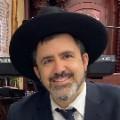
Rabbi Shay Tahan
The following article addresses an issue raised regarding a popular song about Rabbi Shimon Bar Yochai, often sung on Lag BaOmer. As with previous articles—such as the discussion on the song "I Will Always Have Only Good" and the debate over whether Hashem needs us—the intention here is not to take a side, but to present and clarify the various perspectives involved in the conversation.
Here is the beginning of the song:
לכבוד התנא האלוקי רבי שמעון בר יוחאי
אורחים נכבדים, ידידים נחמדים, מי לכם פה ומה לכם פה,
לכבוד התנא האלוקי רבי שמעון בר יוחאי
בני ירושלים, אהובים ושלמים, מי לכם פה ומה לכם פה,
לכבוד התנא האלוקי רבי שמעון בר יוחאי
Translation:
In honor of the Tanna Elokai, Rabbi Shimon Bar Yochai
Honored guests, dear friends—who is here for you and what brings you here?
In honor of the Tanna Elokai, Rabbi Shimon Bar Yochai
Sons of Jerusalem, beloved and whole—who is here for you and what brings you here?
In honor of the godly Tanna, Rabbi Shimon Bar Yochai
The repeated words of songs sung in honor of Rabbi Shimon Bar Yochai include phrases "L’kavod HaTanna Elokai," which translates to "In honor of the Tanna, my God." This usage has raised questions among scholars and community members about the appropriateness of such language, as it may blur the distinction between reverence for a revered sage and the worship due only to Hashem.
Critics argue that referring to Rabbi Shimon Bar Yochai with a term typically reserved for Hashem could inadvertently suggest a form of deification, which is contrary to core Jewish beliefs. They emphasize the importance of maintaining clear boundaries in language to preserve the monotheistic integrity of Jewish worship.
They further argue that the original lyric used the word Eloki, meaning "a godly sage," but that those singing it later altered it to Elokai in order to rhyme with the following word, Bar Yochai. This change, however, is seen by some as problematic, as it introduces theological concern and risks attributing a title reserved for Hashem to a human being.
Explanation of the term Elokai
To explain the use of the word Elokai, Rabbi Moshe Brandsdorfer (a prominent posek in Yerushalayim) notes a distinction between saying Elokai and HaElokai—with the added hei. He argues that since the song uses the form HaElokai, it is permitted, as this indicates that Rabbi Shimon Bar Yochai is godly or connected to the Divine, rather than identifying him as God Himself. On the contrary, Rabbi Yitzchak Ratzabi argues that the hei makes it even worse, as it more directly refers to Hashem.
Some explain the grammar by noting that in Aramaic, Elokai is used instead of Eloki. Others attribute it to a Chassidic pronunciation style, while still others argue that it should actually be Eloka’i, which also means “godly.”
We do find on the command (Shemot 34; 23) to appear three times a year before the Master—Hashem, that the Zohar comments that Rabbi Shimon Bar Yochai is described in terms that seem to ascribe divine qualities, such as the expression "מאן פני האדון דא- רשב"י"—“Who is the face of the Master? This is Rabbi Shimon Bar Yochai.” While such language originates within deeply mystical contexts, it has raised significant concerns among later authorities who caution against interpreting these phrases literally.
The Yaavetz (Mitpachat Sfarim) voice strongly rejecting any literal interpretation of these expressions writes:
‘Who is the face of the Master? This is Rabbi Shimon bar Yochai.’
Such a phrase is undoubtedly offensive and blasphemous. In this matter, I show no partiality to anyone—even if it were the real Rabbi Shimon bar Yochai himself (Heaven forbid to suspect him of accepting divinity; on the contrary, this proves such words never came from him, and never crossed his mind. Even if the greatest of prophets said it, I would not obey. I will accept no justification in such a matter).
Heaven forbid to imagine these are the words of our holy Torah sages, who are faithful to Hashem—to give His glory to another. Such a thing must not occur in Israel. One who associates the Name of Heaven with something else…
Here lies an open gateway for those who breach the boundaries of the world.”
Others explain (Matok Midvash on the Zohar) that the Zohar does not imply that Rabbi Shimon Bar Yochai is a god, but rather that, because Hashem is always with him, he is akin to the face of the Shechinah, or more accurately, the forefront. In this sense, through his presence, the righteous are glorifying Hashem.
in english
- Category
- Lag B'Omer - Лаг Ба Омер
- Tags
- bar yochai
Up Next
-
1:26:24

Who Is Rabbi Shimon Bar Yochai?
-
08:36
Adama Veshamayim Is It Kosher Song?
-
02:01
Bar Yochai Song
-
02:34
Kosher Switch Controversy - Is it Really Kosher?
-
02:32
The Merit of Bar Yochai
-
17:37
Who is Rabbi Shimon bar Yochai?
-
1:39:28
Lag B'Omer - From Bar Yochai to Ben Yishai
-
09:31
Rabbi Shimon Bar Yochai
-
34:44
Rabbi Shimon Bar Yochai
-
06:04
Bar Yochai - בר יוחאי, ואמרתם כה לחי
-
05:21
בר יוחאי - Bar Yochai
-
03:12
Rabbi Shimon Bar Yochai
-
1:23:59
Вся правда об отношениях
-
28:30
Ҷал Гитан ве Лақам Мондан - Злиться и Давать Клички
-
56:31
Rashi, a life story of Rabbi Shlomo Yitzhaqi - Movie
-
1:13:48

Признаки пришествия Мессии
-
12:49
Қувати Заифо
-
03:47
Ту Би Шват - Қувати дараҳт ве одами зод
-
15:00
История о праведности Сулики
-
04:14
Нарушая Шаббат не получишь никакого блага
-
31:54
Пасхальная Попурри в Бухарском Стиле
-
27:22
So, Do You Want a Tikkun?