




בס״ד - BS"D
Play Random Video     Candle Lighting Times     Jewish Calendar    Halachic Times


We endorse > Sushi Fussion < lunch, takeout & catering
Today is: -

Bereishit

  • Ayeka - Where Are You?

    This is Part 2; please read Part 1 before proceeding with the content below.

    Recently, I heard a thought about Adam HaRishon and his eating of the fruit from the Tree of Knowledge, as when one associates oneself with that sin, it limits one's growth. It is a nice idea, but please allow me to approach this from a different angle.

    In Parashat Bereshit 3:9-11, says: "וַיִּקְרָ֛א יה׳ אֱלֹהִ֖ים אֶל־הָֽאָדָ֑ם וַיֹּ֥אמֶר ל֖וֹ אַיֶּֽכָּה׃ - G-d Hashem called out to the Human and said to him, "Where are you?" 

    וַיֹּ֕אמֶר אֶת־קֹלְךָ֥ שָׁמַ֖עְתִּי בַּגָּ֑ן וָאִירָ֛א כִּֽי־עֵירֹ֥ם אָנֹ֖כִי וָאֵחָבֵֽא׃ - He replied, I heard the sound of You in the garden, and I was afraid because I was naked, so I hid.

    וַיֹּ֕אמֶר מִ֚י הִגִּ֣יד לְךָ֔ כִּ֥י עֵירֹ֖ם אָ֑תָּה הֲמִן־הָעֵ֗ץ אֲשֶׁ֧ר צִוִּיתִ֛יךָ לְבִלְתִּ֥י אֲכׇל־מִמֶּ֖נּוּ אָכָֽלְתָּ׃  - Who told you that you were naked? Did you eat of the tree from which I had forbidden you to eat?"

    Let's stop here. As always, everything that is about to follow is just my two cents, my opinion, may be something to ponder about.

    So, what happened here?

    Adam ate the fruit, and Hashem is looking for him? I don't believe it's that simple; there must be more to it. Hashem knows where everyone is, and especially He knows where His creation is, right there in the Garden. By asking Ayeka - Where are you? I believe, Hashem meant something else. 

    If you read part 1, in my opinion, Rabbi Akiva ate the fruits from the Tree of Knowledge, and this propelled him to become one of the greatest teachers we have ever had, a person who taught the next generation of rabbis, who have passed on the Torah as we know it Today. 

    Similarly, Adam, by eating the fruit from the Tree of Knowledge, gained knowledge of the Torah and its laws - halachot, which is why he was hiding, since the law says that one can't be naked out in the open. 


    But there's a problem. There was no Torah given to him yet. 

    So, in 3:21, "וַיַּ֩עַשׂ֩ ייה׳ אֱלֹהִ֖ים לְאָדָ֧ם וּלְאִשְׁתּ֛וֹ כׇּתְנ֥וֹת ע֖וֹר וַיַּלְבִּשֵֽׁם׃ - And G-d made garments of skins for Adam and his wife, and clothed them." And drove them out of the Garden of Eden. 

    But let's further develop this idea, because I feel we're on to something huge!

    In Talmud Bava Metzia 59a, we have an interesting story.

    The story begins with a halakhic dispute regarding an oven called "Tanur shel Akhnai" or "The Oven of Akhnai." This oven was constructed from separate tiles with sand placed between each tile. The main question was whether this oven, when disassembled and reassembled, retained its original status or became a new entity. This distinction was crucial for matters of ritual purity.

    Rabbi Eliezer ben Hurcanus argued that the oven lost its status, meaning that if it had been ritually defiled, it would lose that impure status.

    The majority of the sages ruled that it retained its original status throughout the disassembly and reassembly process.

    On that day, when they were discussing this matter, Rabbi Eliezer gave all possible answers to support his view, but the Rabbis disagreed with him. After he could not convince the Rabbis, Rabbi Eliezer said to them:

    If the law is according to my opinion, 'This carob tree will prove it'. The carob tree has uprooted itself and moved from its place one hundred cubits, and some say four hundred cubits. The Rabbis said to him: One does not bring halakhic proof from the carob tree. 

    Rabbi Eliezer then said to them, 'If the halakha is according to my opinion, the stream will prove it.' The water in the stream turned backward and began flowing in the opposite direction. They said to him, 'One does not bring halakhic proof from a stream.' 

    Rabbi Eliezer then said to them: If the halakha is according to my opinion, 'The walls of the study hall will prove it'. The walls of the study hall leaned inward and began to fall. Rabbi Yehoshua scolded the walls and said to them: 'If Torah scholars are arguing with each other in matters of halakha, what is the nature of your involvement in this dispute?' The Gemara says: The walls did not fall because of the respect due Rabbi Yehoshua, but they did not straighten because of the respect due Rabbi Eliezer, and they remained leaning. 

    Rabbi Eliezer then said to them: If the halakha agrees with my opinion, 'Heaven will prove it'. A Divine Voice, Bat Kol emerged from Heaven and said: 'Why are you arguing with Rabbi Eliezer, as the halakha does agree with his opinion in every place that he expresses an opinion?' 

    In response to the Divine proclamation, Rabbi Yehoshua rose to his feet and quoted Deuteronomy 30:12, declaring "Lo BaShamayim He" – "It [the Torah] is not in Heaven." This bold statement asserted that once G-d gave the Torah at Mount Sinai, its interpretation was entrusted to human scholars rather than through Divine revelation.

    Rabbi Yirmiyah explained this principle further, stating that since the Torah was already given at Mount Sinai, Jews are instructed to "follow the majority" in legal matters. This establishes the principle that halakhic decisions are made through human deliberation and majority rule, rather than through miraculous signs or Divine voices. After this incident, Rabbi Eliezer was boycotted or put in cherem.

    When Hashem came to Adam, and said: Ayeka - Where are you? G-d meant, Adam, where are you, in the Garden of Eden - in the upper world, or down there in the lower world? Your knowledge of Torah and its laws, the halachot, is not for the spiritual world in the Garden of Eden, but it is for the lower world of physicality - the Earth. 

    This is one of the reasons why Hashem gave the Torah to Moshe Rabbenu in Parashat Yitro, as angels cannot fulfill it because they lack parents and cannot show them respect, and are unable to keep hundreds of other commandments that only us, the humans can fulfill on Earth, down here in the physical realm.

    The Sages teach us that when the baby is conceived, an angel teaches the entire Torah to a fetus in the womb. Then, just before he is born, the angel taps him on his upper lip (which leaves an indentation right under the nose). The baby forgets what he had learned, as it says in the Talmud Niddah 30b. I would also assume that the angel has given a tap on Adam's upper lip as well, so he should forget the Torah that he acquired by eating the fruit or by "using a shortcut."

    But what is this thing called: law or halacha? 

    This is the Word of G-d, which is interpreted and explained by the rabbis of each generation and passed on to the next. You can find it in the pages of the Talmud and the written works of the rabbis of each generation, which make up the Oral Torah. 


    Welcome to Orthodox Judaism, which is the Word of G-d. It is not in Heaven, but down here on planet Earth - interpreted, explained, accepted, and embraced by the millions. 

    When Rabbi Nathan encountered the prophet Eliyahu, and asked what G-d's reaction was to the argument of The Oven of Akhnai. The Prophet Eliyahu said that G-d smiled and said, "My children have defeated Me, My children have defeated Me," (Talmud Bava Metzia 59b), showing Divine pleasure in human interpretive authority.

    So, if what you have read so far makes sense, and since the law is made and changed by the majority, and if the majority of the Sages agree with me that Adam haRishon was hiding since he knew the halacha that one cannot be naked out in the open. And Ayeka - Where are you? - is Hashem's question to Adam, in which world is he - Upper or the Lower, and that the law can be practiced only in the Lower world and not in the Upper. 

    And if the majority of the Sages have agreed to my opinion above, then may I have the authority just for a second, to call upon the Sages of our Times, to release Rabbi Eliezer ben Hurcanus forever from the cherem/boycott and set him free, so that he may be allowed to sit in the Yeshivah Shel Malaa or The Bet Midrash in Heaven, together with the colleagues of the yesteryears. And just like it was in the olden days, may he state the law as equal, and go head to head with the Mighty of the Upper Worlds. 

    So, my friend, grab a book and learn the laws of Orthodox Judaism - The Shulchan Aruch. The laws that have been analyzed, debated, agreed upon, accepted, and embraced by millions throughout the history of the Jewish people. We have a lot of catching up to do.
    Since by learning the laws, we join the millions around the world who are living day-to-day by the Word of the Living G-d. 

    Shmuel Katanov

    Read more
  • Let us make man in our image

    And G-d said, Let us make man in our image... - וַיֹּ֣אמֶר אֱלֹהִ֔ים נַֽעֲשֶׂ֥ה אָדָ֛ם בְּצַלְמֵ֖נוּ - Bereshit 1:26

    There are many explanations for this verse, such as who did G-d speak with, and who did He consult with? The Sages say that G-d has consulted with the angels before creating a man... But maybe it could also have a different meaning.

    Perhaps it was not the angels that Hashem consulted with, but rather the souls of future rabbis and teachers of the Torah. Like, for example, Avraham, Yitzchak, Yaakov, Moshe, Aharon, David, Shlomo, Rambam, Rashi, the sages of the Talmud and Mishna, and the rabbis of every generation until our times.

    Why? Because these are the people who dedicate their lives to learning Torah, something happens to them as they do so. They become holy, and their Tzelem Elokim or Divine Image is revealed to the world.

    So, Hashem was speaking to these great souls, or shall we say - instructing them: Let us make man in OUR IMAGE. What does it mean - in Our Image or Divine Image - it is a study of how to emulate Hashem - to be holy as Him, to do as Him, to live life according to His Torah, and His laws.

    Since Hashem is Holy, and the above souls already have the Divine Image, which is revealed later because of their learning, and self-work to emulate Hashem - their congregants, and their followers that come to shuls, and places of study all across the globe, haven't yet acquired their Divine Image. So, this will be the job of the rabbis and the teachers of the Torah in every generation - to teach, to guide, and to help individuals to reveal their Divine Image while leaving their own Torah knowledge in the pages of the Talmud, in their students, and in their books.

    Shmuel Katanov

    Read more
  • The Mystery of The Lit Candle

    Have you ever wondered why we light a candle during the Bedikat Chametz, or the Search for the Leavened Bread? This may seem like an ancient ceremony to the outsider, but as always, there may be reasons for it, and we should look into it.

    On the night of Bedikat Chametz, we use a candle and look for 10 pieces of bread that we hid before. Also, let me mention that we use a lit candle on Motzeh Shabbat during Havdalah. Why do we do that? Is there a connection between these two candles? There is, so let's examine it closely.

    The first time the fire is mentioned is in the Midrash for Parashat Bereshit, when Adam and Chavah left Gan Eden. When the night falls, it says that Adam gets scared since this is the first time he has experienced nighttime. Hashem told him not to worry since it is a normal occurrence. He taught him how to start a fire with stones, which gave Adam peace of mind and calmed him down. But more could be added to this Midrash, or it could be explained from a different angle.


    Let's start with a question: how come Adam and Chavah ended up outside of Gan Eden?


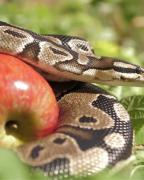
    In Parashat Bereshit, right after Hashem created the world, Hashem told Adam not to eat from the Tree of Knowledge; in turn, Adam told Chavah not to touch the tree. Later, when Adam wasn't around, Chavah was approached by a Nachash, a primordial snake. This is when the snake persuaded her to eat from the Tree of Knowledge by telling her Lashon Hara, or slandering Hashem, and she fell for it. There are several opinions about the tree's fruit - apple, grape, bread, and others... but I strongly believe this tree had ready-to-eat bread growing as fruit. 


    So there was Chavah - she took the fruit of that tree - a piece of bread from the Tree of Knowledge, and right before she ate it, the snake placed his poison into it - and Chavah ate the poisoned bread. And at that moment, the Yetzer Hara, or an Evil Inclination, went into her, and then she made Adam eat it as well. There they were, with Yetzer Hara, or Evil Inclination — also known as the bad character traits, such as jealousy, anger, hatred, dishonesty, rudeness, and more — deeply rooted in them and passed on to billions of people throughout the generations until today, all across the world.


    Hashem wasn't happy about this. He punished Adam, Chavah, and the snake, but humanity was still infected, and Hashem had to figure out how to somehow cleanse the people from it.


    And this is what Hashem did.


    Remember the time when Moshe Rabbeinu came to Egypt and took the Jewish nation out of Mitzrayim? In Parashat Beshalach, Hashem has given us manna in the desert—pure bread—food for the angels. It was bread that was digested fully by the body with no waste. There's a reason why Hashem has put millions of people in the desert on this diet—only one reason—to raise the nation spiritually to the level Adam HaRishon was at when he was in Gan Eden. 


    But later, when we get to Parashat Shelach, suddenly, the selected few get the idea of spying out the Land. Hashem is not so excited about this idea, but He still lets Moshe send out an expedition, which he does. After forty days, when they come back, what do they do? This time, they slander the Land of Israel. Hashem tried to cleanse the nation from that original sin that happened in Gan Eden, and raise the nation to high spiritual levels by giving them manna, but they fell for the same sin again, and this time by slandering the Land. So, Hashem decided to kill all the males between the ages of 20 and 60 years old of that generation, and only their children went to Israel years later. 


    But the Evil Inclination still dwelt in those who went to Eretz Yisrael.


    So, in Parashat Bo 12:11 it says, "So shall you eat it: your loins girded, your shoes on your feet, and your staff in your hand. You shall eat it in haste. It is a Passover offering to G-d." It continues in 12:34 & 39: "The people picked up its dough before it could become leavened, their leftovers bound up in their garments upon their shoulders. They baked the dough they took out of Egypt into unleavened cakes, for they could not be leavened, for they were driven from Egypt, for they could not delay." 


    So, for generations, eating unleavened bread—matzah, a pure bread with no chametz—has been set as a holiday of Pesach. 


    The Sages teach us to celebrate the night of Pesach and feel as if we are leaving Mitzrayim. But I don't believe that by leaving Mitzrayim, they meant that we should leave any physical location. Our Mitzrayim is our OK with the current situation, our contentment with it, and our will to continue living in it. Because the moment we understand what happened, we realize we have lost—and we have lost BIG.


    On Motzeh Shabbat, when we make the blessing for a lit candle, we look at our fingernails, which remind us of Adam HaRishon, since it says in the Midrash that his whole skin was covered by fingernails like skin, but now we have nails only on our fingers and toes. But this is not the only loss; it should remind us of others. It should remind us that we no longer live in the Gan Eden. No longer have ready-to-eat bread growing on the trees, and have to toil daily for a piece of bread. We no longer have a close relationship with Hashem and thus live in the darkness. No Bet Hamikdash, and no Eretz Yisrael, with wars, diseases, hunger, death, conflicts, and a whole lot of troubles across the globe.


    Therefore, while we look for chametz with a lit candle and gather the pieces of chametz—the leavened bread —we realize: Chametz, it is because of you that we have lost so much. The life we have, and the life the whole world has is not what Hashem initially intended it to be - and instead, we suffer today because of the poison the snake put into the bread - which is the fruit of the Tree of Knowledge - which in turn has infected us, humans, with the Yetzer Hara or Evil Inclination from which we suffer daily. We take that bread and burn it, and with it, we annul all the Chametz that may be in our possession -- thus weakening its influence over us for the next 7 days.


    And to all those who think that G-d has abandoned the Jewish nation, should know that He has neither abandoned nor given up on us.


    He has commanded us to celebrate the Holiday of Pesach for seven days. And on this holiday, we are commanded to eat unleavened bread—the bread with zero chametz—the matzah. When we eat the matzah, we grow in our belief in G-d, and most importantly, in kedushah - the holiness. And this will eventually lead to the ultimate redemption, Mashiach, and the Third Bet Hamikdash. May this happen speedily in our days. Amen!!


    Shmuel Katanov

    Read more

Latest Essays

  • The Failed Mission
    The Failed Mission
    In every essay I have written so far, I have presented a question and answered it, but in this one, I would like to have a...
  • The Mystery of The Half Shekel
    The Mystery of The Half Shekel
    I want to share an interesting idea with you. There are many explanations for the reason for half shekel, but please allow me...
  • The “Well-Meaning” In-Laws
    The “Well-Meaning” In-Laws
    Do you know what I thought was interesting? When Yitro came to the Nation in the desert, then Aharon, the elders, Yitro, and...
  • The “Borrowed” Treasures
    The “Borrowed” Treasures
    Isn't it strange that Hashem is telling Moshe Rabbeinu to ask the nation to go and ask for gifts of silver and gold from the...
  • Yosef & “The Spies”
    Yosef & “The Spies”
    As always, what is about to follow is just my opinion, based on studying the Holy Books, and my understanding of the verses....

Most Popular Essays