




Problems playing the video? Click Here to reload
Watch Videos: Random | New | Popular
All Essays | Report Video
|
Share Video
- Buy Us a Coffee -

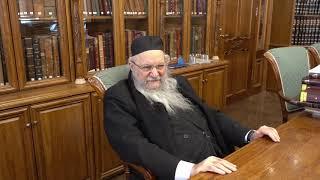
Rabbi Shay Tahan
A man once complained to his wife: “Why do the kids make such a fuss over Mother’s Day, but barely notice Father’s Day?”
She smiled and replied: “Fathers don’t need a day — they have an entire month: Chodesh Av.”
At first, it’s just clever wordplay — “Av” means both “father” and the name of a month. But the humor opens the door to something deeper — especially if we’re trying to understand Mother’s Day through a Torah lens.
It raises a real question: is it correct to concentrate a year-long obligation of honoring parents into a single day?
Because the truth is, the joke works precisely because it highlights a contrast. A father, at least in the joke, can be associated with a month — something extended and structured. But a mother? She gets a day. Why?
Not because her role is smaller, but because it is so constant that it risks becoming unnoticed.
And that is exactly where the tension lies.
On the one hand, the Torah’s demand of honoring parents is absolute and continuous. It is not seasonal, not symbolic, and not satisfied by gestures. Reducing it to a “day” would be a distortion — almost a way of discharging a lifelong obligation with a single annual act.
But on the other hand, human nature doesn’t function on ideals alone. What is constant becomes background. What is always present is often least acknowledged.
So the question is not whether a day is “correct” — but how it is used.
If Mother’s Day becomes a substitute — a way of saying, “I’ve done my part for the year” — then it directly undermines the Torah’s vision.
But if it becomes a disruption — a moment that forces a person to confront how much he overlooks, how much he takes for granted — then it can actually serve the Torah’s goal, not replace it.
In that sense, a single day can never carry the weight of a year-long obligation. But it can illuminate it.
Let’s try to find a parallel in Torah sources that sharpens the discussion.
Chazal teach in Talmud Bavli (Shabbat 118) that one should not recite Hallel every single day. By contrast, tefillah is recited three times daily, and a person may even pray more if he wishes.
The difference is fundamental.
Tefillah is talking to Hashem, it’s the language of relationship. It expresses dependence, connection, and ongoing engagement. The more a person prays, the deeper the relationship becomes. That is why it is constant—built into daily life.
Hallel, however, is different. It is an expression of praise, celebration, and heightened recognition. And praise cannot be constant. If Hallel were said every day, it would lose its meaning and impact. What is meant to feel elevated would become routine—and routine often becomes empty.
This distinction speaks directly to Mother’s Day.
The obligation to honor one’s mother is like tefillah—constant, ongoing, and not limited to specific moments. It is a relationship, not an event. It cannot be fulfilled through occasional gestures alone.
But expressions of appreciation—praise, special attention, and visible acts of honor—are more like Hallel. If they were constant, they might lose their impact. Precisely because they are occasional, they carry weight when they happen.
So the balance becomes clear:
The relationship must be constant.
The expression can be occasional.
Mother’s Day is not the mitzvah—it is the Hallel:
a focused moment of appreciation that, when used properly, strengthens rather than replaces the steady, daily relationship.
At this point, however, a sharper question emerges:
Are we even allowed to establish a day like this—something that resembles a “holiday”?
The Ramban writes that one who creates new religious observances in the style of the Torah’s festivals may violate bal tosif—the prohibition against adding to the mitzvot.
So is Mother’s Day a problem?
The answer depends on how it is framed.
If one treats it as a religious obligation—a day endowed with inherent sanctity or a quasi–Yom Tov status—then it begins to resemble an addition to the Torah’s system, precisely what bal tosif warns against. What began as a human expression is transformed into a formal institution, with structure, expectation, and even a sense of obligation.
But if it is understood simply as a personal occasion—a practical tool to express gratitude, without any claim of mitzvah-status or holiness—then it is fundamentally different. It is not a new “holiday,” but a chosen moment of expression, no more halachically binding than deciding to give a gift, make a phone call, or show extra care.
And now the earlier distinction becomes crucial:
The mitzvah itself—honoring one’s mother—remains like tefillah: constant, ongoing, and non-negotiable.
The day is only like Hallel: an occasional expression, not an institution.
So the issue is not the existence of the day—but its definition.
The moment a day replaces the mitzvah, it becomes a problem.
The moment it serves the mitzvah, it becomes meaningful.
in english
- Category
- Honoring Parents - Почитание родителей
- Tags
- mother's day
Up Next
-
21:29

Torah's Perspective on Honoring those who have Passed On
-
45:03
Coronavirus – A Torah Perspective
-
31:45
Birthdays In Torah Perspective
-
1:06:32
Love -The Torah Perspective
-
17:34
The Financial Crisis From A Torah Perspective
-
1:08:16
The Torah Perspective On Aliens!?
-
34:45
Jewish Monarchy - a Torah Perspective
-
06:35
Story Of The Mother Of The Ridbaz Chizuk On Sacrificing For Torah
-
15:45
Advice on How to Improve Any of your Relationships from a Torah perspective
-
01:16
Does the Angel Teach a Girl Torah in the Mother’s Womb?
-
03:05
The Torah Perspective On Using Marijuana
-
16:49
What Is the Torah's Perspective on Thanksgiving?
-
1:23:59

Вся правда об отношениях
-
28:30

Ҷал Гитан ве Лақам Мондан - Злиться и Давать Клички
-
56:31
Rashi, a life story of Rabbi Shlomo Yitzhaqi - Movie
-
1:13:48

Признаки пришествия Мессии
-
12:49

Қувати Заифо
-
03:47

Ту Би Шват - Қувати дараҳт ве одами зод
-
15:00

История о праведности Сулики
-
04:14
Нарушая Шаббат не получишь никакого блага
-
31:54
Пасхальная Попурри в Бухарском Стиле
-
27:22
So, Do You Want a Tikkun?